The Krell Patch
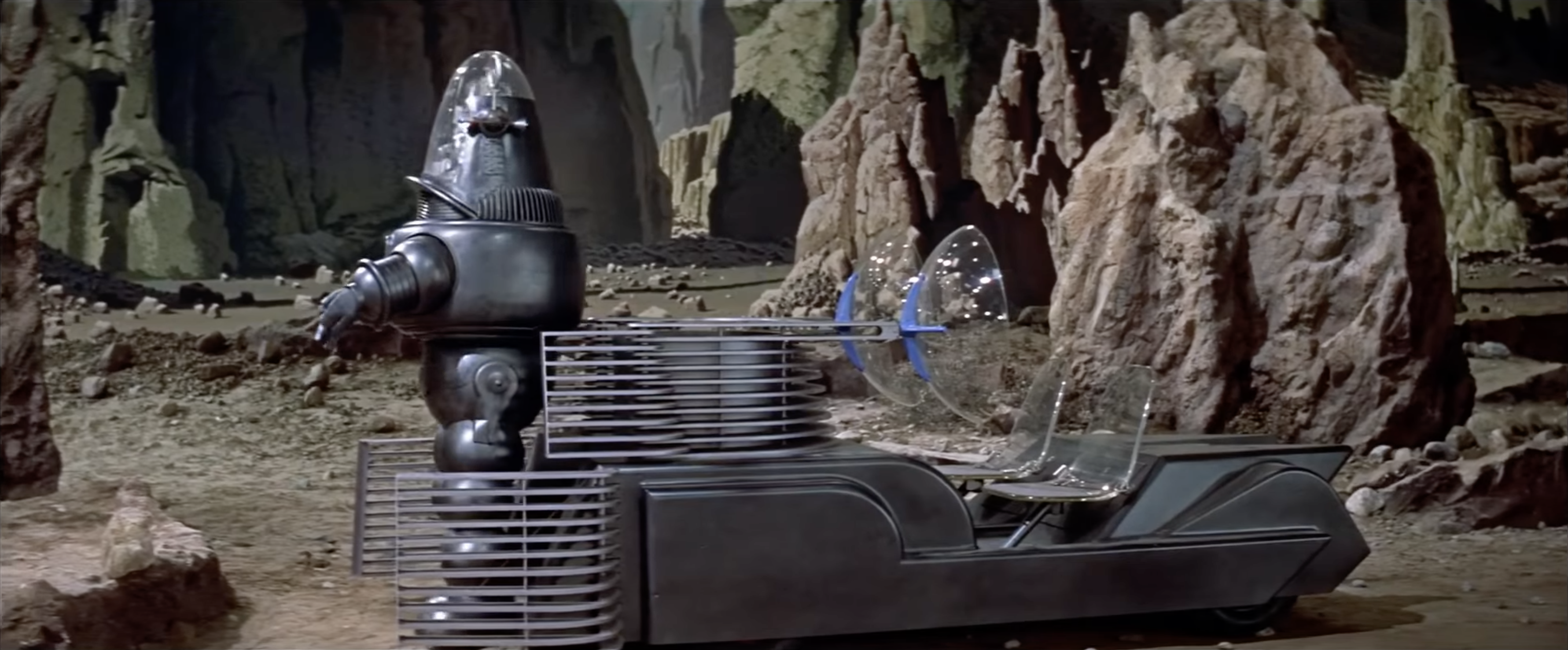
Exploring the Krell Patch in Eurorack Modular SynthesizersThe Krell Patch stands as a cornerstone in the world of generative music within modular synthesis, particularly in the Eurorack format. This self-evolving sound design technique creates unpredictable, organic soundscapes that mimic alien worlds or abstract ambient environments. Named after the advanced alien race in the 1956 sci-fi film Forbidden Planet, the patch draws from the film’s groundbreaking electronic soundtrack and has become a rite of passage for modular enthusiasts seeking to explore randomness and modulation in their systems.Origins and HistoryThe roots of the Krell Patch trace back to the innovative work of composers Bebe and Louis Barron, who crafted the eerie, otherworldly tones for Forbidden Planet using custom-built electronic circuits. These circuits, based on feedback loops and self-destructing tube designs, produced sounds that evoked the mysterious Krell civilization.
![[forbidden_planet.png]]
https://www.youtube.com/watch?v=HYjbn8f4PEY
In the 1970s, Buchla synthesist Todd Barton rediscovered and adapted this concept for modular synthesizers, creating a generative patch that plays itself with ever-changing pitches, envelopes, and durations.
https://www.youtube.com/watch?v=f4O3oFneUvE
Barton’s version, often simply called “the Krell,” emphasizes organic evolution—notes fade in and out, cluster in flurries, or stretch into lingering decays, all without repetition. The patch gained popularity in the modular community through forums, videos, and tutorials, evolving from Buchla systems to more accessible Eurorack setups. It’s celebrated for its challenge: recreating the alien-like, 1950s sci-fi aesthetic while allowing for personal twists. Today, it’s a benchmark for understanding probability, feedback, and modulation in synthesis.The Basic ConceptAt its core, the Krell Patch is a generative system where a single voice produces notes with randomized pitch, duration, and timbre. It relies on a feedback loop: a cycling envelope generator drives the sound, triggering random voltages that modulate the envelope itself, creating perpetual variation.
This “modulation feedback” ensures the patch evolves organically, much like a living organism.In Eurorack terms, the patch translates Buchla concepts to common modules. Buchla’s banana jacks and pulse signals differ from Eurorack’s 3.5mm jacks and voltage standards (e.g., Buchla uses ~1V audio levels vs. Eurorack’s 10V peaks), but equivalents exist.
Key elements include:
- Cycling Envelope Generator: Acts as the heartbeat, looping to create attack-decay (AD) shapes that control a VCA.
- Random Voltage Sources: Provide unpredictability for pitch, timing, and timbre.
- Oscillator and VCA/Filter: Generate and shape the audio signal.
- Sample & Hold (S&H): Captures random values at envelope cycle ends.
The result is a melody that feels alive, with notes varying in length (from staccato blips to sustained tones), pitch (random but often quantized for musicality), and texture (through filtering or wavefolding).Building a Basic Krell Patch in EurorackTo recreate a Krell Patch, start with essential modules: a voltage-controlled oscillator (VCO), envelope generator (EG), VCA, filter, and random source. Here’s a step-by-step guide based on common implementations:
-
Core Envelope and Triggering:
- Use a looping AD envelope (e.g., Make Noise Maths or Intellijel Quadrax) set to cycle with short attack/decay times (~0.3 seconds initially). This envelope controls the VCA, gating the oscillator’s audio.
- Patch the envelope’s end-of-cycle (EOC) trigger to a Sample & Hold module.
-
Random Pitch Generation:
- Feed a noise source (white or pink) into the S&H input. The EOC trigger samples this noise, producing a random voltage.
- Quantize this voltage (using a quantizer like Intellijel Scales) and send it to the VCO’s 1V/oct input for pitched notes.
-
Modulation Feedback:
- Use additional random voltages (e.g., from a Wogglebug or Doepfer A-149) to modulate the main envelope’s attack and decay times. This creates varying note lengths.
- For deeper evolution, employ slow fluctuating random voltages (FRVs) to skew pitches higher/lower or modulate filter frequencies over time.
-
Timbre Control:
- Route the oscillator through a bandpass filter (e.g., centered at ~62 Hz with wide bandwidth) modulated by random voltages for shifting resonances.
- Add wavefolding or FM for percussive to woody tones.
Signal flow: Oscillator → VCA (controlled by main EG) → Filter → Output. Random sources feed back into EG parameters and pitch.
ConclusionThe Krell Patch embodies the exploratory spirit of modular synthesis, blending history, randomness, and creativity. In Eurorack, it’s accessible yet endlessly expandable, inviting synthesists to craft their own alien symphonies. Whether you’re a beginner patching a basic voice or an expert layering polyphonic evolutions, the Krell reminds us that sometimes the best music comes from letting the machine play itself. Dive in, experiment, and let the feedback loops surprise you.
Molten Music Technology explaining the Krell Patch